Chemical gold plating – it’s more than just a shiny finish. I've seen it transform components from fragile to incredibly robust right on the construction site. For years, I’ve been knee-deep in projects, watching materials fail, and seeing where a little extra protection could have made all the difference. This process, chemical gold plating, is a game-changer. It's not about luxury; it's about reliability, longevity, and frankly, preventing costly downtime. From critical connectors in complex systems to components exposed to harsh environmental conditions, it's become increasingly important.
The need for corrosion resistance and dependable electrical conductivity is growing exponentially as systems become more intricate. I see this daily - equipment failing prematurely because of environmental factors, leading to project delays and budget overruns. Chemical gold plating addresses this directly. It’s a proactive solution, not a reactive fix. We’re moving towards a world where preventative maintenance and extended lifecycles are crucial, and this plating process is a key enabler of that shift.
What I really appreciate is the precision. Unlike some other surface treatments, chemical gold plating doesn’t introduce significant dimensional changes. That's crucial when you’re dealing with tightly-toleranced parts. I've seen projects grind to a halt because of slight deviations in component size. It's a small detail, but a huge impact on overall efficiency. It's not just about making things look good; it’s about making them work reliably, and for the long haul.
The Importance of Chemical Gold Plating in Modern Industry
Chemical gold plating isn't a new technology, but its importance is growing exponentially. The demands on modern electronics and mechanical systems – increased reliability, miniaturization, and operation in harsh environments – are pushing the boundaries of material science. We're seeing a surge in demand across industries, from aerospace to medical devices, and even in the construction tech I’m directly involved in. The ISO standards are becoming stricter, and gold plating is often the only way to meet those requirements.
Globally, the market for precious metal plating, including gold, is estimated to be in the billions, with a significant portion driven by the need for high-performance connectors and corrosion resistance. (Source: Allied Market Research). This isn’t just about making things look pretty. It’s about ensuring critical infrastructure functions reliably, and that's a responsibility we take seriously on every jobsite.
Defining Chemical Gold Plating: A Practical Perspective
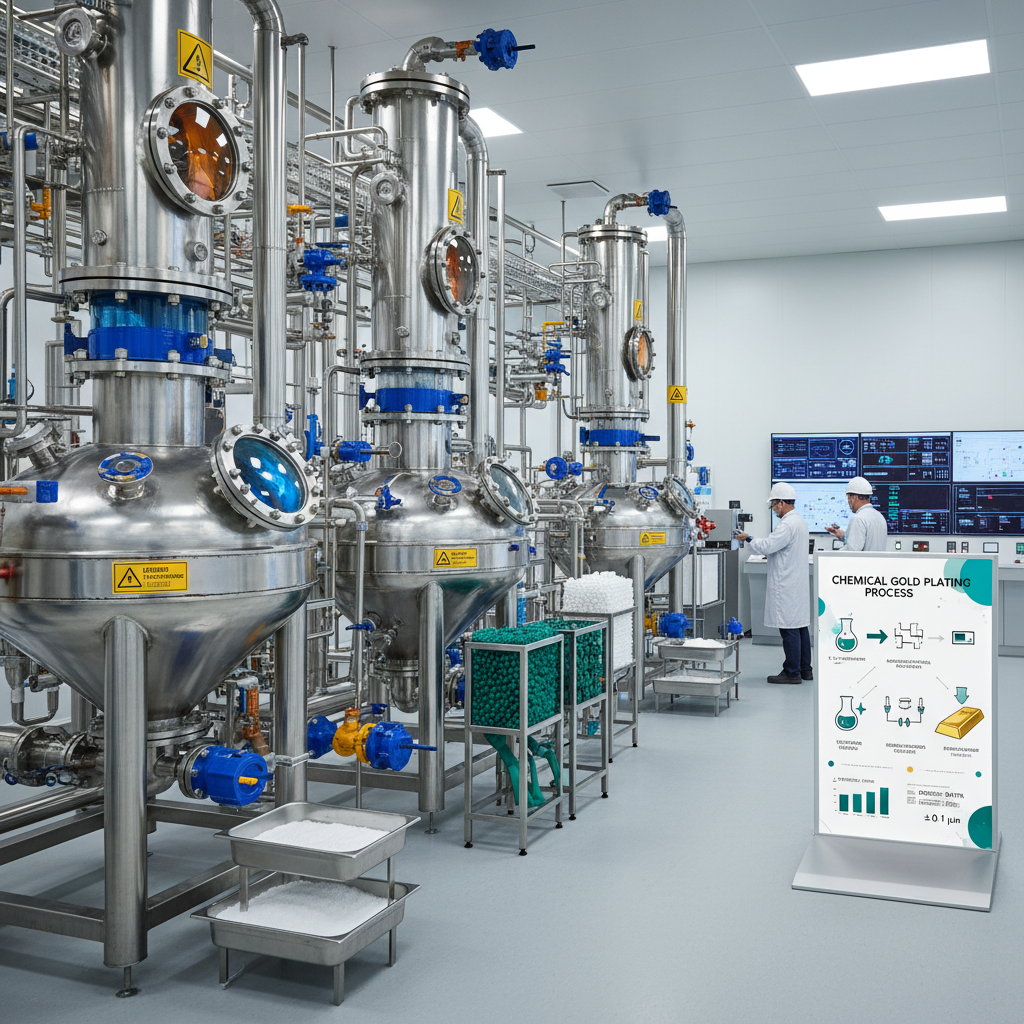
Put simply, chemical gold plating is a process where a layer of gold is deposited onto a substrate through a chemical reaction, not through electrolysis like electroplating. This means we're not using an electric current. It’s a solution-based process, and that has big implications for the types of materials we can plate. You can get a very uniform coating on complex shapes, which is critical for intricate components.
The beauty of it is its ability to coat non-conductive materials, unlike electroplating. This opens up possibilities for plating plastics, ceramics, and other materials that wouldn't normally accept a metallic coating. I've seen it used to create conductive tracks on plastic housings for sensors, which drastically reduces manufacturing costs compared to machining metal housings.
It’s fundamentally linked to modern industry because it allows us to enhance the performance and longevity of critical components without altering their core functionality or adding significant weight. In sectors like medical devices, where biocompatibility is paramount, gold plating provides a safe and reliable surface finish.
Key Factors Driving the Adoption of Chemical Gold Plating
The driving force behind chemical gold plating boils down to four main things: corrosion resistance, conductivity, solderability, and wear resistance. Corrosion is a killer, especially in outdoor environments. Gold is incredibly inert, meaning it doesn't react easily with other substances. I’ve seen connectors literally crumble due to corrosion, and a gold plating can prevent that.
Conductivity is huge. Gold is an excellent conductor of electricity. In high-frequency applications, like RF connectors, it's essential for minimizing signal loss. I've been involved in projects where even a tiny improvement in signal transmission makes a massive difference in overall system performance. Proper conductivity is vital for everything from communications to safety systems.
Finally, gold's solderability is phenomenal. It creates a strong, reliable joint that can withstand temperature fluctuations and mechanical stress. On-site repairs are inevitable, and being able to quickly and reliably solder a connection is crucial for minimizing downtime. The combination of these factors is what makes chemical gold plating such a valuable process.
Global Applications and Real-World Use Cases
You see chemical gold plating everywhere, though you often don’t realize it. In aerospace, it's used on connectors and contacts in avionics systems, where reliability is non-negotiable. In the medical field, it’s used in pacemakers, defibrillators, and other implantable devices to ensure biocompatibility and prevent corrosion.
I've personally seen it used extensively in the development of robust sensors for industrial monitoring. These sensors are often deployed in harsh environments – oil refineries, chemical plants, even offshore platforms – and need to withstand extreme temperatures, humidity, and exposure to corrosive chemicals. The gold plating is what makes it possible.
Chemical Gold Plating Application Breakdown
Advantages and Long-Term Value Proposition
The upfront cost of chemical gold plating is higher than some other plating options, no question. But you have to look at the total cost of ownership. The extended lifespan, reduced maintenance, and improved reliability translate into significant savings over the long term. I’ve seen projects where the initial investment in gold plating more than paid for itself in reduced downtime and repair costs.
From a sustainability standpoint, it also makes sense. Replacing components frequently generates waste and consumes resources. By using a more durable coating, we're extending the lifespan of products and reducing our environmental impact. It's a win-win.
Future Trends and Innovations in Chemical Gold Plating
We’re seeing a lot of research into new formulations for chemical gold plating solutions that reduce the amount of gold required while maintaining performance. This is driven by cost concerns and a desire to make the process more sustainable. There's also work being done on developing more environmentally friendly reducing agents.
Another trend is the integration of chemical gold plating with automation and digital monitoring. Real-time process control is becoming increasingly important for ensuring consistent quality and minimizing waste. We’re even starting to see the use of AI to optimize plating parameters.
Challenges and Solutions in Implementing Chemical Gold Plating
One of the biggest challenges is waste management. The spent plating solutions contain gold and other chemicals that need to be recovered and disposed of responsibly. This adds to the cost and complexity of the process. However, there are companies specializing in precious metal recovery that can help mitigate this issue.
Another challenge is ensuring consistent adhesion of the gold layer to the substrate. Proper surface preparation is critical. This often involves cleaning, etching, and activating the surface to promote adhesion. I've seen failures traced back to inadequate surface prep, so it's a step that can't be skipped.
Finally, controlling the plating thickness and uniformity can be challenging, especially for complex geometries. Advanced process control techniques and careful monitoring of plating parameters are essential.
Core Challenges and Solutions in Chemical Gold Plating Implementation
| Challenge |
Impact on Project |
Solution |
Implementation Cost (1-10) |
| Waste Disposal |
Environmental & Costly |
Partner with Metal Recovery Specialists |
6 |
| Adhesion Issues |
Coating Failure |
Rigorous Surface Preparation Protocols |
4 |
| Thickness Control |
Performance Variability |
Advanced Process Monitoring & Control |
7 |
| Complex Geometries |
Uneven Coating |
Optimized Plating Fixture Design |
5 |
| Solution Stability |
Inconsistent Results |
Regular Solution Analysis & Replenishment |
3 |
| Initial Investment |
Higher upfront cost |
Life Cycle Cost Analysis |
8 |
FAQS
Chemical gold plating stands out due to its ability to coat non-conductive surfaces and achieve exceptional uniformity, even on complex geometries. Unlike electroplating, it doesn't require an electric current, reducing stress on the substrate. The resulting coating offers superior corrosion resistance and a highly reliable electrical connection. This is critical when dealing with delicate components or environments where reliability is paramount.
The gold layer provides a robust barrier against corrosion, oxidation, and wear, significantly extending a component’s functional life. In harsh environments, where corrosion is a major concern, chemical gold plating can often double or triple the operational lifespan of a part. This translates to reduced maintenance costs, less downtime, and a lower total cost of ownership.
One of the key advantages of chemical gold plating is its versatility. It can effectively coat a wide range of materials including metals, ceramics, and plastics. The process works well with substrates like nickel, copper, stainless steel, and various polymers. Proper surface preparation is crucial, but the range of compatible materials is considerably broader than with electroplating.
The primary environmental concern revolves around the spent plating solutions, which contain gold and other chemicals. Responsible waste management and precious metal recovery are essential. Many facilities now implement closed-loop systems to minimize waste and maximize resource utilization. Research into more environmentally friendly plating solutions is also ongoing.
Initially, chemical gold plating often has a higher upfront cost compared to methods like tin or nickel plating. However, when evaluating the total cost of ownership, including lifespan, reliability, and maintenance, chemical gold plating can be more cost-effective. The extended lifespan and reduced downtime often outweigh the initial investment, especially in critical applications.
Yes, chemical gold plating can be scaled for high-volume production. Automated plating lines and optimized process control are used to maintain consistent quality and throughput. While initial setup costs may be higher for automation, the increased efficiency and reduced labor costs can make it economically viable for large-scale manufacturing.
Conclusion
Chemical gold plating isn’t just about adding a shiny layer; it’s a strategic investment in long-term reliability, performance, and cost-effectiveness. From the construction sites I visit daily to the high-tech aerospace components that rely on flawless connections, the benefits of this process are tangible and significant. It addresses critical challenges related to corrosion, conductivity, and durability, making it a vital technology for modern industry.
Looking ahead, I anticipate continued innovation in chemical gold plating, with a focus on sustainability, automation, and cost reduction. Understanding the nuances of this process—from surface preparation to waste management—is crucial for engineers, project managers, and anyone involved in the design and manufacturing of high-performance products. To learn more about how chemical gold plating can benefit your specific application, visit our website: chemical gold plating.