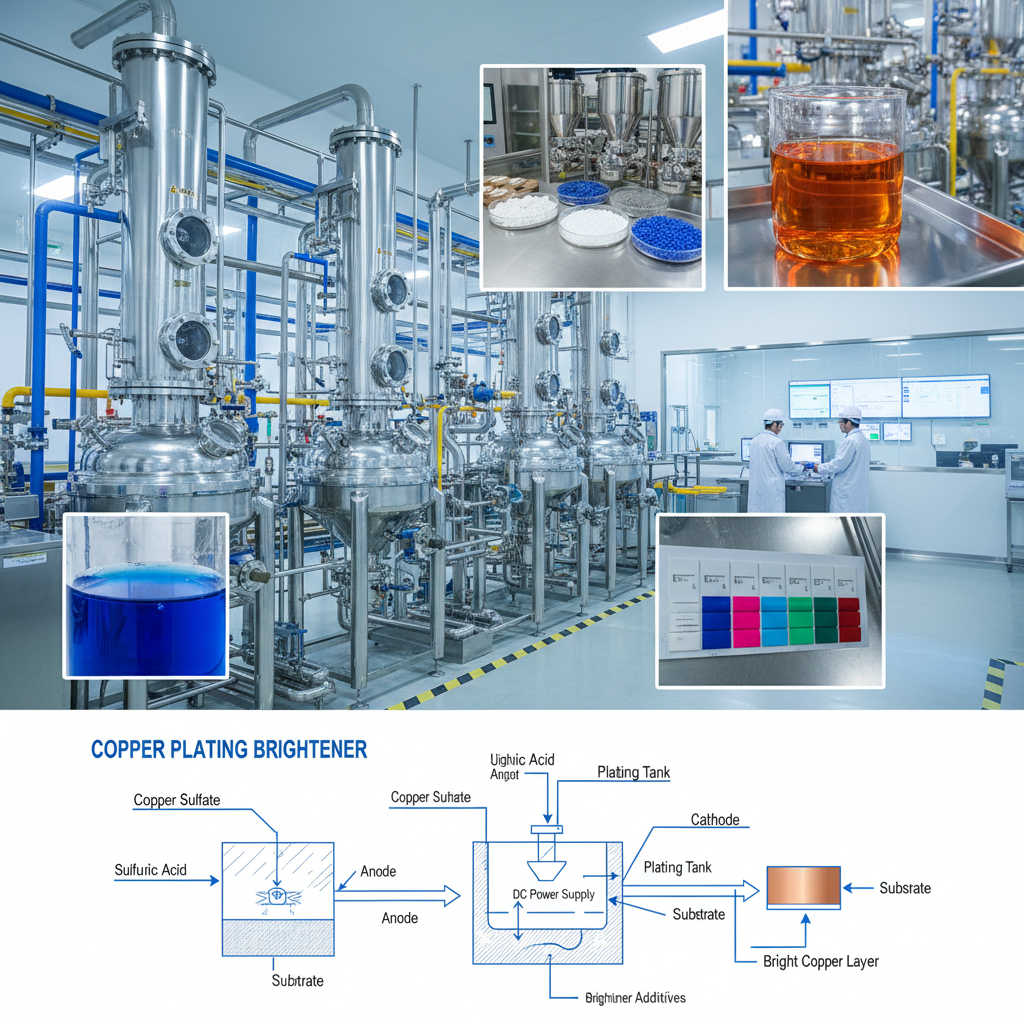
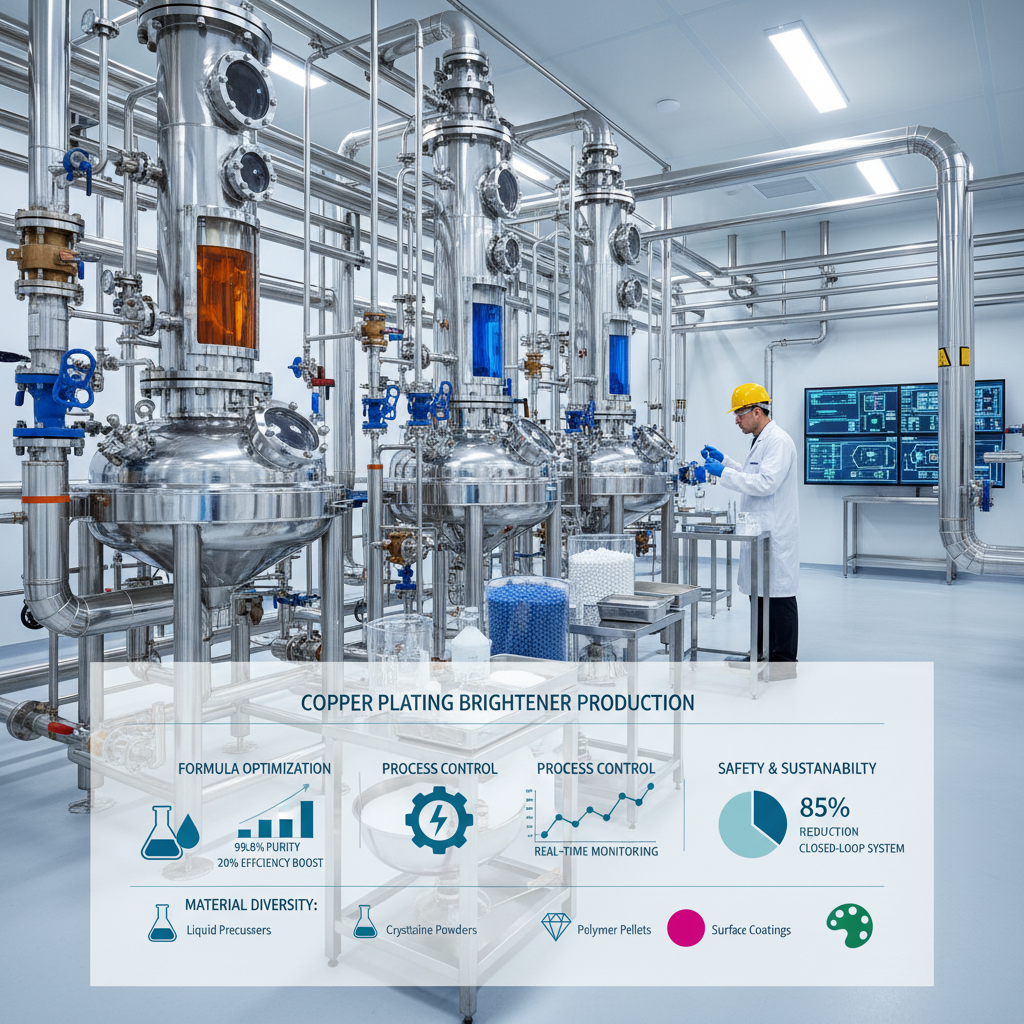
Copper plating brightener is a crucial component in the electroplating industry, enhancing the luster, leveling, and ductility of copper deposits. Its global significance stems from the widespread use of copper plating in electronics, automotive manufacturing, and decorative applications. Understanding the nuances of copper plating brightener formulations is vital for achieving high-quality finishes, improving product performance, and reducing manufacturing costs.
The demand for high-performance copper plating brighteners is driven by the increasing miniaturization of electronic devices and the growing need for corrosion-resistant coatings. Industries reliant on copper plating are continually seeking brighter, more uniform, and more durable finishes. Innovation in copper plating brightener technology directly impacts the quality and reliability of countless products worldwide.
Effective copper plating brighteners allow for reduced plating times, lower energy consumption, and minimized waste, contributing to more sustainable manufacturing processes. The ability to control deposit morphology is paramount in meeting the ever-increasing performance demands of modern technology, making this chemical process exceptionally important.
The Role of Copper Plating Brightener in Modern Industry
Copper plating brightener plays a pivotal role in the electronics industry, where it is essential for creating conductive layers on printed circuit boards (PCBs) and integrated circuits. The quality of the copper deposit, influenced significantly by the brightener, directly impacts the performance and reliability of these devices. Without effective brighteners, achieving the necessary conductivity and corrosion resistance is challenging.
Beyond electronics, the automotive industry relies heavily on copper plating, often employing brighteners to enhance the aesthetic appeal and corrosion protection of decorative components. The use of copper plating brightener ensures a durable and visually appealing finish, contributing to the overall quality of the vehicle.
Defining Copper Plating Brightener: A Comprehensive Overview
A copper plating brightener is a chemical additive used in copper electroplating baths to produce shiny, leveled, and ductile copper deposits. It doesn’t contribute to the copper ions being reduced, rather, it modifies the copper deposition process at the cathode surface, promoting a fine-grained structure and inhibiting the formation of large crystal growth. This results in a smoother, more reflective surface.
Essentially, brighteners work by adsorbing onto the copper surface during plating, influencing the crystal growth and creating a more even distribution of copper ions. Different types of brighteners, such as sulfur-containing compounds, disaccharides, and polymers, offer varying levels of brightening, leveling, and ductility, allowing for customized plating solutions.
The modern availability of high-quality brighteners is intrinsically linked to advancements in materials science and chemical engineering, ensuring consistently reproducible and reliable plating results. They are integral to meeting stringent industrial specifications and achieving optimal performance in diverse applications.
Core Components Influencing Brightener Performance
Brightening Ability: This refers to the capacity of the brightener to produce a highly reflective copper surface. Brighteners containing sulfur compounds are often favored for their excellent brightening effects, contributing to a lustrous finish. The concentration of these compounds needs careful control to avoid negative impacts on other properties.
Leveling Capacity: Leveling refers to the brightener's ability to fill in micro-irregularities on the substrate, creating a smoother, more uniform deposit. Good leveling properties are essential for achieving consistent coating thickness and preventing defects.
Ductility Enhancement: Brighteners often improve the ductility of the copper deposit, making it more resistant to cracking and deformation. This is particularly important for applications involving bending or forming, such as the manufacture of connectors and leadframes. The inclusion of polymeric additives contributes to this property.
Global Applications of Copper Plating Brightener
The electronics industry is the largest consumer of copper plating brightener globally, with applications ranging from PCB fabrication to semiconductor packaging. Asia-Pacific, particularly China, Japan, and South Korea, represents a significant share of this market due to its dominance in electronics manufacturing.
The automotive sector relies on brightened copper plating for decorative trim, connectors, and other components. European and North American automotive manufacturers are key drivers of demand in this region. Moreover, in regions with stringent environmental regulations, the need for brighteners that reduce waste and improve efficiency is paramount.
Beyond these core industries, copper plating with brighteners is used in decorative applications, plumbing fixtures, and even the restoration of antique objects. The versatility of the process and the aesthetic benefits drive demand across diverse sectors.
Comparison of Copper Plating Brightener Methods
Advantages and Long-Term Value Proposition
Utilizing high-quality copper plating brightener translates directly into cost savings through reduced rework and improved product yield. Enhanced deposit properties contribute to increased product lifespan, lowering the overall cost of ownership for end-users.
From a sustainability perspective, optimized brightener formulations can minimize waste generation and reduce the environmental impact of the plating process. This aligns with growing global efforts to promote responsible manufacturing practices and reduce the carbon footprint of industrial operations.
Future Trends and Innovations in Brightener Technology
Current research focuses on developing eco-friendly brighteners that reduce or eliminate the use of harmful substances like formaldehyde and cyanide. These sustainable alternatives are crucial for meeting increasingly stringent environmental regulations and promoting safer working conditions.
The integration of artificial intelligence (AI) and machine learning (ML) in plating process control is another emerging trend. AI-powered systems can analyze real-time data from plating baths and adjust brightener concentrations to optimize performance and minimize defects.
Furthermore, advancements in nanotechnology are leading to the development of brighteners with enhanced leveling and brightening capabilities. Nanoparticles can be incorporated into brightener formulations to fine-tune deposit morphology and achieve superior surface finishes.
Common Challenges and Innovative Solutions
One common challenge is the sensitivity of brightener performance to variations in bath composition and operating conditions. Maintaining consistent bath parameters is crucial for achieving reproducible results, but can be difficult in large-scale industrial settings. Automated monitoring and control systems can help address this issue.
Another challenge is the potential for brightener decomposition over time, leading to reduced performance and increased costs. Developing more stable brightener formulations and implementing regular bath analysis can mitigate this problem. Using replenishment systems can guarantee stable concentration.
Finally, the disposal of spent plating baths containing brighteners poses environmental concerns. Developing efficient recycling and recovery technologies is essential for minimizing waste and promoting a circular economy.
Summary of Copper Plating Brightener Challenges and Potential Solutions
| Challenge |
Impact on Plating Quality |
Potential Solution |
Implementation Cost (1-10) |
| Bath Composition Variation |
Inconsistent Brightness and Leveling |
Automated Monitoring and Control Systems |
7 |
| Brightener Decomposition |
Reduced Brightening Efficiency |
Stable Brightener Formulations & Regular Analysis |
6 |
| Environmental Concerns |
Strict Disposal Regulations |
Recycling and Recovery Technologies |
8 |
| Inadequate Mixing |
Uneven Deposit Thickness |
Optimized Tank Agitation & Baffle Design |
4 |
| Temperature Fluctuations |
Altered Plating Kinetics |
Precise Temperature Control Systems |
5 |
| Contamination of Plating Bath |
Reduced Brightener Effectiveness |
Regular Bath Filtration and Purification |
6 |
FAQS
The ideal concentration range for copper plating brightener typically falls between 0.1% and 1.0% by volume, but this varies significantly depending on the specific brightener formulation, plating bath composition, and desired plating characteristics. Careful titration and monitoring are essential to maintain optimal performance and avoid issues like blistering or dull deposits. Always consult the manufacturer's datasheet for precise recommendations.
The pH of the plating bath is a critical factor influencing brightener effectiveness. Most copper plating brighteners operate optimally within a specific pH range, typically between 4.0 and 6.0. Deviations from this range can lead to reduced brightening, leveling, and ductility. Maintaining a stable pH through the addition of appropriate buffers is crucial for consistent results.
While it’s possible to combine different types of copper plating brighteners, it’s generally not recommended without thorough testing and understanding of their compatibility. Some brighteners can exhibit synergistic effects, enhancing overall performance, while others may interact negatively, leading to instability or reduced effectiveness. Compatibility charts and expert advice are crucial.
Common signs of brightener depletion include a noticeable decrease in deposit brightness, reduced leveling capacity (resulting in rougher surfaces), and increased susceptibility to blistering or pitting. Regular bath analysis, including brightener concentration measurements, is essential for detecting depletion and ensuring timely replenishment. Observing the current density can also provide an indication.
Spent plating baths containing brighteners are considered hazardous waste and must be disposed of in accordance with local and national environmental regulations. This typically involves treatment to remove heavy metals and other contaminants, followed by secure landfill disposal or, ideally, recovery and recycling of valuable components. Contacting a certified waste management provider is essential.
Copper plating brighteners often contain corrosive or toxic chemicals, so appropriate safety precautions must be followed. This includes wearing personal protective equipment (PPE) such as gloves, goggles, and respirators, working in a well-ventilated area, and avoiding contact with skin and eyes. Refer to the Material Safety Data Sheet (MSDS) for detailed safety information.
Conclusion
In summary, copper plating brightener is an indispensable component in numerous industrial processes, offering essential benefits in terms of deposit quality, performance, and cost-effectiveness. Understanding the fundamental principles of brightener chemistry, proper application techniques, and emerging trends is crucial for achieving optimal plating results and addressing the evolving demands of modern manufacturing.
Looking ahead, the development of sustainable and highly efficient brightener formulations will be paramount, driven by environmental concerns and the need for reduced manufacturing costs. Investing in research and innovation in this field will not only enhance the performance of copper plating processes but also contribute to a more environmentally responsible and sustainable industrial future. Visit our website at www.moneidechem.com to explore our comprehensive range of copper plating brighteners and solutions.