Welcome to Tangshan Moneide Trading Co., Ltd.


Welcome to Tangshan Moneide Trading Co., Ltd.

Fine chemical manufacturers are the backbone of numerous industries, providing essential building blocks for pharmaceuticals, agrochemicals, specialty polymers, and more. Their role is critical in global supply chains, driving innovation and enabling the production of countless products that impact our daily lives. Understanding the nuances of this sector – from manufacturing processes to quality control and regulatory compliance – is paramount for businesses, researchers, and policymakers alike.
The global fine chemical industry is a multi-billion dollar market, experiencing consistent growth driven by increasing demand for customized chemical solutions. Factors such as rising healthcare expenditure, the expansion of the agricultural sector, and the growing need for specialized materials contribute to this upward trend. However, the industry faces challenges related to environmental sustainability, supply chain disruptions, and stringent regulatory frameworks, making efficient and responsible manufacturing practices more important than ever.
Investing in the knowledge of fine chemical manufacturers offers significant advantages. It allows businesses to optimize sourcing strategies, researchers to develop cutting-edge materials, and regulators to establish effective environmental and safety standards. This understanding ultimately fosters innovation, enhances product quality, and promotes sustainable practices within the chemical industry.
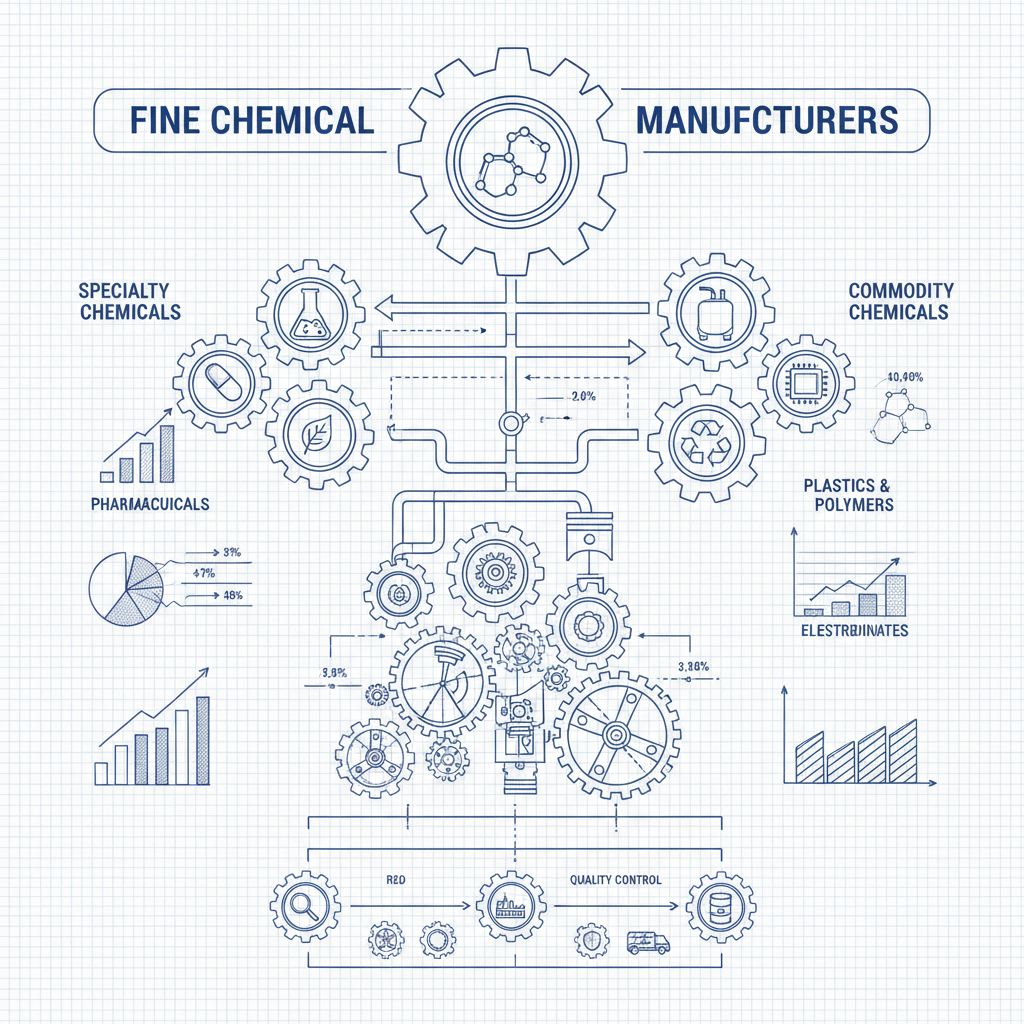
Fine chemical manufacturers specialize in producing complex, single, pure chemical substances. Unlike commodity chemical manufacturers who focus on large-volume production, fine chemical companies typically operate on a smaller scale, creating chemicals with high purity and specific properties. This allows them to cater to niche markets and specialized applications. fine chemical manufacturers play a vital role in numerous downstream industries.
These manufacturers are essential for the creation of advanced materials, life-saving pharmaceuticals, and high-performance agrochemicals. Their ability to deliver customized solutions and maintain stringent quality standards sets them apart from general chemical production facilities. A robust network of fine chemical manufacturers is thus crucial for supporting technological advancements and improving global living standards.
Fine chemical manufacturers specialize in complex, low-volume chemicals with high purity and specific properties, often tailored to customer needs. Commodity chemical producers focus on large-scale production of basic chemicals used as raw materials. The complexity of synthesis, quality control standards, and production scale are key differentiators.
Fine chemical manufacturers often face stringent regulations, particularly those supplying the pharmaceutical or agrochemical industries. Common requirements include Good Manufacturing Practices (GMP), ISO certifications, environmental regulations regarding waste disposal and emissions, and adherence to specific country-level guidelines. Documentation and traceability are critical.
Sustainability is increasingly important. There’s growing pressure to adopt green chemistry principles, reduce waste, minimize energy consumption, and utilize renewable feedstocks. Companies demonstrating a commitment to sustainability often gain a competitive advantage and attract environmentally conscious customers.
Custom synthesis refers to the production of specific chemicals according to a customer’s unique requirements. It’s important because many research and development projects, as well as specialized product applications, require compounds not readily available commercially. Fine chemical manufacturers with custom synthesis capabilities provide valuable support to their clients.
Analytical chemistry is crucial for quality control, process monitoring, and ensuring product purity. Techniques like chromatography, spectroscopy, and titrimetry are used to identify, quantify, and characterize chemical compounds throughout the manufacturing process, guaranteeing compliance with specifications.
Supply chain disruptions, like those experienced recently, significantly impact fine chemical manufacturers due to their reliance on specialized raw materials. Mitigating these risks involves diversifying sourcing, building buffer inventories, and establishing strong relationships with reliable suppliers. Resilience and agility are key.
In conclusion, fine chemical manufacturers are indispensable contributors to a vast range of industries, driving innovation and enabling the production of essential products. Their expertise in complex synthesis, commitment to quality, and adaptability to evolving market demands are crucial for success. Understanding the core characteristics, challenges, and future trends within this sector is vital for businesses, researchers, and policymakers seeking to navigate the ever-changing chemical landscape.
Looking ahead, embracing sustainable practices, leveraging digital technologies, and fostering collaborative partnerships will be essential for fine chemical manufacturers to thrive. By prioritizing innovation, efficiency, and responsible manufacturing, this industry will continue to play a pivotal role in shaping a more sustainable and technologically advanced future. Visit our website at www.moneidechem.com to learn more.


Moneide Chemicals