Welcome to Tangshan Moneide Trading Co., Ltd.
Welcome to Tangshan Moneide Trading Co., Ltd.

The world of textiles is constantly evolving, driven by innovation in material science and chemical engineering. Central to this evolution is the application of fine chemical used in textile industries. These specialized chemicals aren't simply additives; they are integral components that dictate the performance, durability, and aesthetic qualities of fabrics. From enhancing colorfastness to imparting water repellency and wrinkle resistance, fine chemicals are foundational to modern textile production.
Globally, the textile industry represents a multi-trillion dollar market, with significant economic impact in developing and developed nations alike. The demand for high-performance textiles, driven by sectors like sportswear, protective clothing, and technical fabrics, is fueling the need for sophisticated chemical solutions. Understanding the nuances of fine chemical used in textile industries is crucial for manufacturers seeking to maintain competitiveness and meet evolving consumer expectations.
Furthermore, growing concerns surrounding sustainability and environmental impact are driving a shift towards greener chemical alternatives. Innovations in bio-based chemicals and closed-loop manufacturing processes are reshaping the landscape, demanding a deep knowledge of the chemistry involved. This makes expertise in fine chemical used in textile industries not just a commercial advantage, but an environmental imperative.

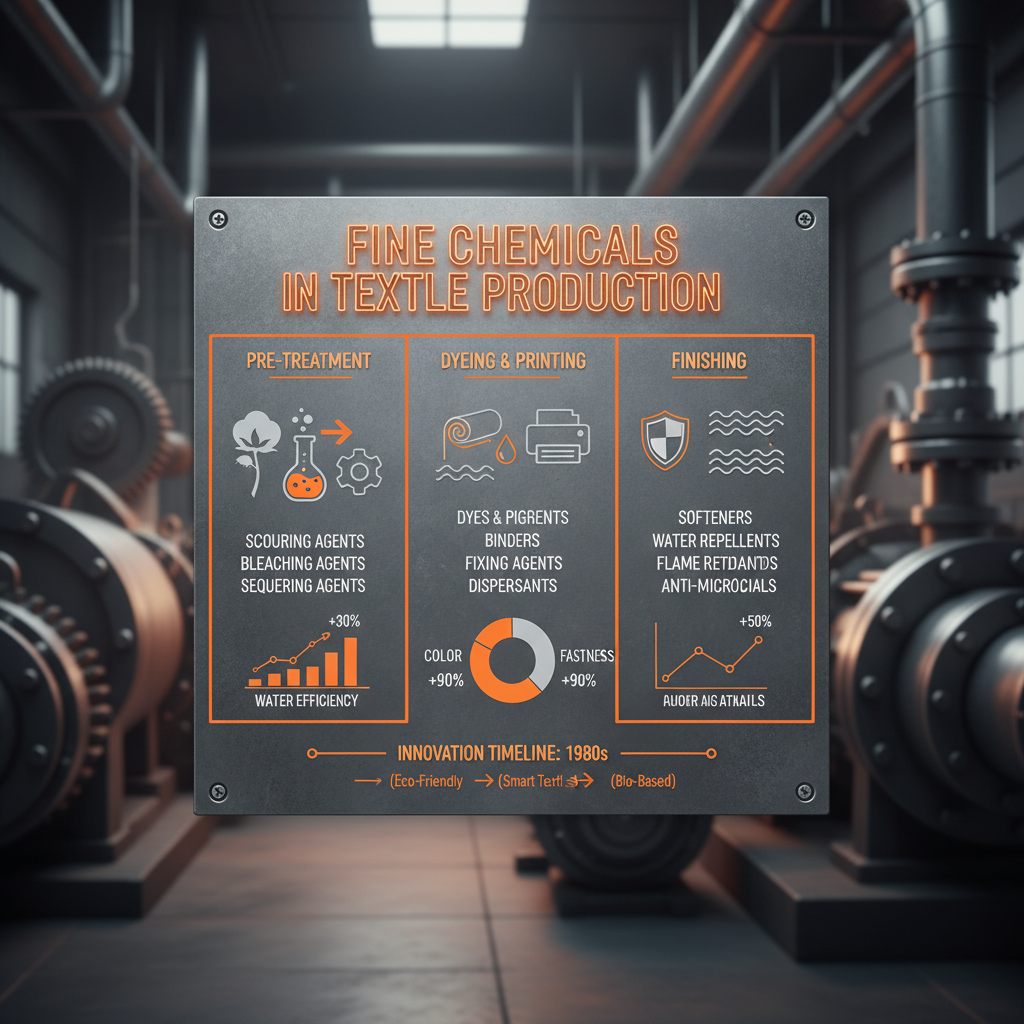
The textile industry, a cornerstone of global commerce, is valued at over $1.7 trillion annually (source: Statista, 2023). Much of this value is directly attributable to the sophisticated chemical processes used to transform raw fibers into finished fabrics. Fine chemical used in textile industries, ranging from dyes and pigments to finishing agents and flame retardants, are essential for meeting diverse market demands.
However, the industry faces increasing scrutiny regarding its environmental footprint. Traditional textile processing often involves significant water consumption, energy usage, and the discharge of harmful pollutants. This challenge has driven significant investment in research and development of more sustainable chemical solutions, creating a rapidly evolving market landscape.
The ISO 14001 standard for environmental management systems is becoming increasingly prevalent in textile manufacturing facilities, reflecting a growing commitment to responsible chemical handling and waste reduction. Manufacturers are actively seeking innovative fine chemical used in textile industries that minimize environmental impact without compromising performance or cost-effectiveness.
Traditional textile chemicals often contain volatile organic compounds (VOCs), heavy metals, and persistent organic pollutants (POPs). These substances can contaminate water sources, harm ecosystems, and pose health risks to workers and consumers. The manufacturing processes themselves can be energy-intensive and generate significant waste streams, exacerbating environmental impact.
Bio-based chemicals are rapidly closing the performance gap with conventional chemicals. While some earlier generations of bio-based alternatives lacked the same durability or effectiveness, advancements in materials science have led to significant improvements. Many bio-based options now offer comparable, and in some cases superior, performance characteristics, alongside a drastically reduced environmental footprint.
Nanotechnology is being used to develop advanced textile finishes with enhanced properties. Nanoparticles can impart water repellency, stain resistance, UV protection, and antimicrobial performance with reduced chemical usage. However, it’s crucial to address potential environmental and health impacts associated with nanoparticle release and disposal through careful research and responsible application.
Proactive compliance requires a robust chemical management system, including detailed tracking of chemical inventories, thorough hazard assessments, and employee training. Utilizing third-party certification programs like OEKO-TEX Standard 100 can demonstrate adherence to safety standards. Staying informed about evolving regulations in key markets is also essential.
Circular economy principles, such as chemical recycling and closed-loop systems, offer a significant opportunity to reduce waste and resource depletion. Recovering and reusing chemicals from textile waste streams can minimize reliance on virgin materials and lower environmental impact. This requires innovative technologies and collaborative efforts across the value chain.
While initial costs for sustainable chemicals may be higher, long-term benefits often outweigh these expenses. Reduced waste, lower energy consumption, improved brand reputation, and decreased regulatory risks contribute to overall cost savings. Furthermore, consumer demand for sustainable products is increasing, creating a competitive advantage for companies that prioritize eco-friendly practices.
In conclusion, fine chemical used in textile industries are the unsung heroes of modern textile production, enabling innovation, enhancing performance, and addressing critical needs across diverse sectors. From improving fabric durability to ensuring environmental sustainability, these specialized chemicals play a pivotal role in shaping the future of the industry. Understanding their properties, applications, and evolving trends is essential for manufacturers, researchers, and policymakers alike.
Looking ahead, continued investment in research and development of bio-based alternatives, coupled with the implementation of circular economy principles, will be crucial for minimizing the environmental footprint of the textile industry. By embracing innovation and prioritizing sustainability, we can ensure a vibrant and responsible future for this essential global industry. For more information on our range of high-quality textile chemicals, visit our website: www.moneidechem.com.


Moneide Chemicals