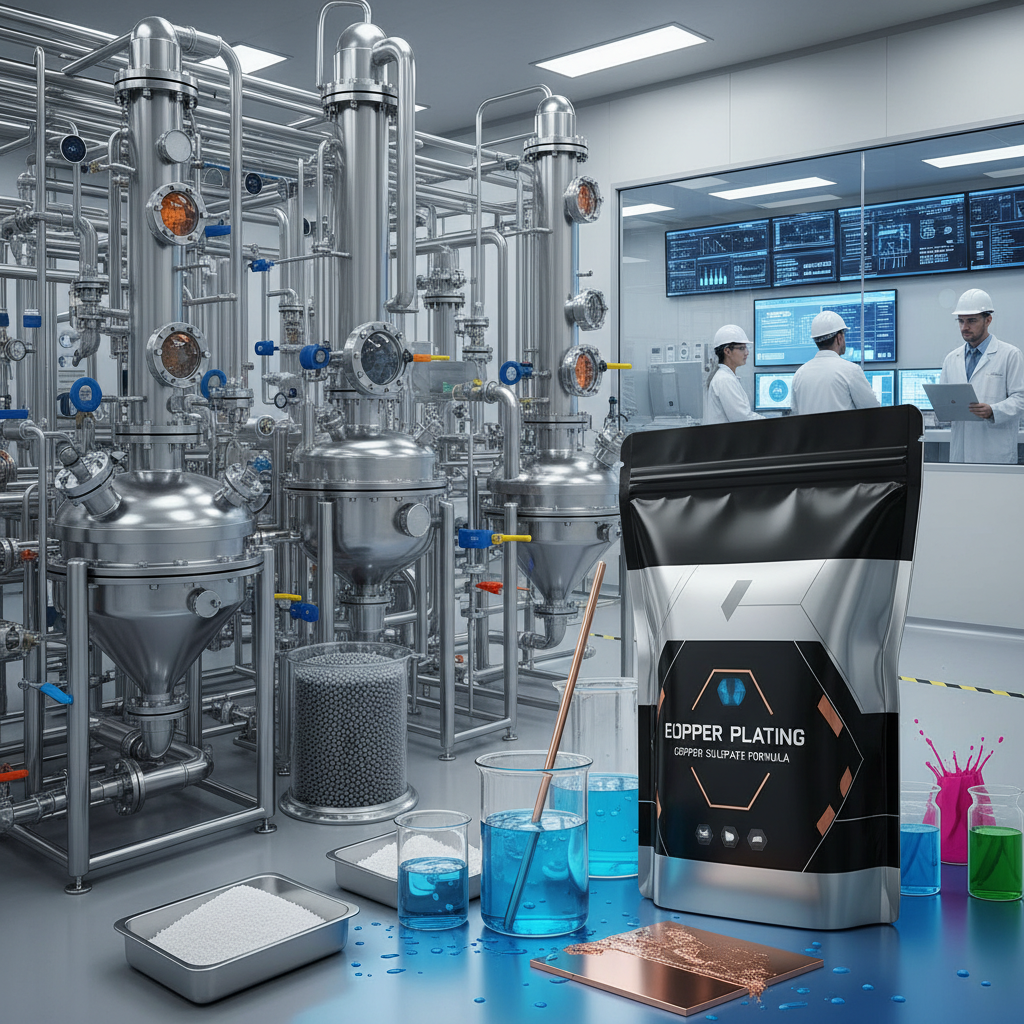
Copper plating with copper sulfate is a cornerstone of modern electrochemistry, serving as a vital process for enhancing electrical conductivity and corrosion resistance across a multitude of industrial sectors. By utilizing a copper sulfate electrolyte, manufacturers can deposit a high-purity layer of copper onto various substrates, ensuring structural integrity and superior surface finishing. This process is not merely a technical requirement but a strategic advantage in the production of high-performance electronic components and durable industrial machinery.
On a global scale, the demand for efficient copper plating with copper sulfate has surged alongside the proliferation of 5G technology and the transition toward electric vehicles (EVs). The ability to create precise, conductive pathways on circuit boards and robust terminals depends heavily on the stability and purity of the copper sulfate bath. As industries push for miniaturization and higher power densities, understanding the nuances of this plating process becomes essential for maintaining quality standards.
Understanding the chemistry and application of this process allows engineers to optimize production costs while maximizing product lifespan. Whether it is used for decorative purposes or critical industrial shielding, copper plating with copper sulfate offers a balance of cost-effectiveness and reliability. By integrating advanced intermediates and additives, the industry continues to evolve, ensuring that copper deposition meets the rigorous demands of the 21st-century technological landscape.
Global Industry Context of Copper Sulfate Plating
The global landscape for copper plating with copper sulfate is intricately linked to the growth of the semiconductor and automotive industries. With the ISO standards emphasizing precision and consistency in surface treatments, the adoption of high-purity copper sulfate electrolytes has become a benchmark for quality control. Market data suggests a steady increase in the consumption of electroplating chemicals as emerging economies expand their manufacturing hubs, particularly in Southeast Asia and Eastern Europe.
However, the industry faces significant challenges regarding environmental regulations and the management of wastewater containing heavy metals. The tension between the need for high-throughput production and the requirement for "green" chemistry has led to a surge in research into closed-loop systems. By optimizing the copper plating with copper sulfate process, companies can reduce chemical waste while maintaining the high conductivity required for modern circuitry.
Definition and Chemical Mechanism
In simple terms, copper plating with copper sulfate is an electrolytic process where copper ions from a sulfate-based solution are deposited onto a conductive surface. The copper sulfate ($CuSO_4$) acts as the primary source of copper ions, while an external electrical current drives the migration of these ions toward the cathode (the part being plated). This results in a uniform, metallic layer that provides an ideal base for further plating or direct electrical contact.
This mechanism is fundamental to modern humanitarian and industrial needs, such as the production of affordable medical devices and reliable communication infrastructure in developing regions. By providing a cost-effective way to create conductive surfaces, copper sulfate plating enables the mass production of essential electronics that would otherwise be prohibitively expensive if using solid copper components.
The connection between the chemical composition of the bath and the final physical properties of the plating is critical. Factors such as pH levels, temperature, and the concentration of sulfuric acid influence the grain size and adhesion of the copper layer. Therefore, mastering the chemistry of copper plating with copper sulfate is essential for achieving a mirror-like finish or a high-strength industrial coating.
Core Components for Optimal Deposition
The success of copper plating with copper sulfate depends on several core components, the first being Electrolyte Purity. Using high-grade copper sulfate ensures that no contaminating ions interfere with the deposition process, which prevents pitting and nodules on the surface of the plated part.
Secondly, the role of Organic Additives, such as brighteners and levelers, cannot be overstated in the context of copper plating with copper sulfate. These chemicals manage the distribution of copper ions across the substrate, filling in microscopic valleys and ensuring a perfectly smooth topography, which is critical for high-frequency signal transmission in PCBs.
Finally, Current Density Control and Thermal Stability determine the overall scalability of the process. Maintaining a consistent temperature prevents the decomposition of additives, while precise current regulation ensures that the copper plating with copper sulfate maintains a consistent thickness across complex geometric shapes.
Key Performance Factors in Production
When evaluating the efficiency of copper plating with copper sulfate, manufacturers focus on metrics like deposition rate, adhesion strength, and energy consumption. A high-efficiency bath allows for faster turnaround times without compromising the structural integrity of the copper layer. By balancing the concentration of sulfuric acid with the copper sulfate levels, operators can maximize the conductivity of the solution, thereby reducing power costs.
Furthermore, the scalability of the process allows it to be implemented in both small-scale laboratory settings and massive industrial plating lines. The ability to maintain tight tolerances on thickness—often measured in micrometers—makes copper plating with copper sulfate indispensable for the fabrication of precision connectors and aerospace components.
Performance Comparison of Copper Plating Methods
Global Applications and Industrial Use Cases
The practical applications of copper plating with copper sulfate span multiple continents and industries. In the electronics hubs of Taiwan and South Korea, it is the primary method for "via filling" in multi-layer printed circuit boards, ensuring that electrical signals can travel vertically between layers with minimal resistance. Without the precision of copper sulfate baths, the smartphones and laptops we use today would be significantly bulkier and less efficient.
Beyond electronics, this process is critical in the automotive sector, particularly for the production of battery terminals and busbars in electric vehicles. In remote industrial zones or post-disaster relief operations, copper-plated components are often used in the rapid deployment of temporary power grids due to their reliability and ease of soldering. The versatility of copper plating with copper sulfate allows it to serve as an undercoat for nickel or gold plating, enhancing both the durability and the aesthetic appeal of the final product.
Long-Term Value and Sustainability
The long-term value of copper plating with copper sulfate lies in its unparalleled ability to balance performance with cost. By utilizing a relatively abundant chemical like copper sulfate, industries can achieve high-performance results without the need for exotic or prohibitively expensive materials. This economic viability fosters innovation, allowing companies to experiment with new designs in renewable energy hardware, such as solar panel connectors and wind turbine controllers.
From a sustainability perspective, the industry is shifting toward the recovery and recycling of copper from spent plating baths. Modern filtration and ion-exchange technologies allow for the reclamation of copper ions, reducing the environmental footprint of copper plating with copper sulfate. This circular economy approach not only protects the ecosystem but also lowers raw material costs for the manufacturer.
Moreover, the reliability of copper sulfate plating provides a sense of trust and safety in critical infrastructure. When a bridge's structural sensors or a satellite's communication array rely on copper-plated contacts, the precision of the deposition process directly translates to the longevity of the asset. This intersection of engineering excellence and social responsibility defines the modern value proposition of the electroplating industry.
Future Trends and Technological Innovations
Looking ahead, the future of copper plating with copper sulfate is being reshaped by digital transformation and automation. "Industry 4.0" is introducing smart sensors into plating tanks that monitor ion concentration and pH levels in real-time, allowing for autonomous dosing of chemicals. This minimizes human error and ensures that every batch of copper plating with copper sulfate meets a rigorous, pre-defined quality standard.
Another burgeoning trend is the development of "green" additives that replace traditional organic compounds with biodegradable alternatives. These innovations aim to make the process of copper plating with copper sulfate entirely eco-friendly, meeting the stringent requirements of the European Green Deal and similar global initiatives. The integration of pulse plating technology is also enhancing the grain structure of the deposited copper, leading to even higher conductivity and hardness.
As we transition toward a more electrified world, the demand for copper will only increase. The continued refinement of copper plating with copper sulfate will be essential for the next generation of quantum computing and high-capacity energy storage systems. The synergy between chemical engineering and digital control is paving the way for a new era of precision manufacturing.
Comparative Analysis of Copper Plating Process Parameters
| Parameter |
Impact on Quality |
Optimal Range |
Risk of Deviation |
| Sulfate Concentration |
Ion Availability |
200-250 g/L |
Poor Throwing Power |
| Sulfuric Acid Level |
Bath Conductivity |
50-70 g/L |
Excessive Oxidation |
| Bath Temperature |
Deposition Rate |
20-30°C |
Additive Degradation |
| Current Density |
Thickness Control |
2-5 A/dm² |
Burnt Deposits |
| Brightener Dosage |
Surface Gloss |
ppm Level |
Dull Finish |
| Agitation Speed |
Ion Distribution |
Moderate |
Thickness Variation |
FAQS
Copper plating with copper sulfate is preferred due to its high deposition efficiency, superior electrical conductivity, and relative cost-effectiveness. Unlike cyanide-based baths, the sulfate process is safer for operators and more environmentally manageable, while still providing the excellent adhesion and leveling required for high-end electronics and industrial components.
Temperature plays a critical role in the stability of the organic additives used in the bath. If the temperature is too high, brighteners and levelers can decompose, leading to a dull or uneven finish. Conversely, if the bath is too cold, the deposition rate decreases, and the risk of internal stress in the copper layer increases, potentially causing peeling.
No, the copper sulfate process is electrolytic and requires a conductive substrate. To plate non-conductive materials like plastics, an initial "seed layer" must be applied using electroless copper plating. Once a thin conductive layer is established, the part can then be transferred to a copper plating with copper sulfate bath for rapid and thick deposition.
Burning typically occurs when the current density is too high, especially at the edges or corners of the part. This causes copper to deposit too rapidly and haphazardly, creating a rough, powdery surface. This can be solved by adjusting the current, improving agitation, or using "robber" wires to divert excess current away from high-density areas.
Adhesion starts with rigorous surface preparation. Ensuring the substrate is free from oils, oxides, and contaminants through degreasing and acid activation is essential. For copper plating with copper sulfate, ensuring the compatibility of the strike layer and maintaining the correct pH of the bath will significantly enhance the bond between the substrate and the copper.
While it involves heavy metals, the process is becoming increasingly sustainable through the use of closed-loop filtration and ion-exchange systems that recover copper. By minimizing waste and replacing toxic additives with biodegradable alternatives, the industry is reducing the ecological footprint of copper plating with copper sulfate while maintaining industrial productivity.
Conclusion
Copper plating with copper sulfate remains an indispensable pillar of the global manufacturing sector, bridging the gap between raw material conductivity and finished product performance. From the intricate pathways of a microprocessor to the robust terminals of an electric vehicle, this process ensures that electrical efficiency is maximized while production costs remain sustainable. By focusing on electrolyte purity, precise current control, and the integration of advanced additives, manufacturers can achieve a level of precision that supports the most demanding technological advancements of our time.
As we move toward a future defined by green energy and digital intelligence, the evolution of copper plating with copper sulfate will be characterized by greater automation and a commitment to circular chemistry. We encourage industry professionals to adopt smart monitoring systems and eco-friendly intermediates to stay competitive in an increasingly regulated market. For those seeking high-purity chemicals and expert guidance in electroplating, we invite you to explore our comprehensive range of solutions. Visit our website: www.moneidechem.com