Welcome to Tangshan Moneide Trading Co., Ltd.





Moneide Chemicals
Tel: 86-315-8309571
WhatsApp/WeChat/Mobile: 0086-15633399667
Skype: janet-honest
Mail: sales@moneidechem.com
Address: 2-7-523 Jidong Building Materials Tangshan, Hebei 064000 China
Cresol Red
|
Chemical Name |
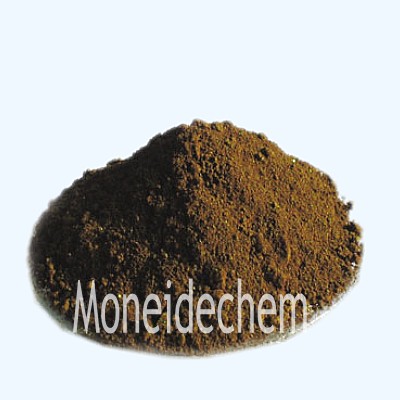
Cresol Red |
|
Another name |
o-Cresolsulfonphthalein; 4,4'-(3H-2,1-Benzoxathiol-3-ylidene)bis(2-methylphenol) S,S-dioxide |
|
CAS No. |
1733-12-6 |
|
Molecular formula |
C21H18O5S |
|
EINECS No. |
217-064-2 |
|
Molecular weight |
382.43 |
|
Molecular Structure |
|
|
Details |
Appearance: brownish red crystal Assay: 80% min. Max Absorption wavelength, λ1(PH6.5): 432~436 nm λ2(PH8.5): 571~574 nm Mass absorption coefficient L/(cm·g) α1〔λ1(PH6.5)〕49-67 , α2〔λ2(PH8.5)〕100-132 Solubility in Ethanol: Pass Loss on drying: 0.2% max Residue on ignition (sulfate):3.0%max |
|
Main Application |
A sulfonylurea indicator, used as pH indicator. |

1. What is cresol red used for?
Cresol red is a pH-sensitive dye commonly used as a biochemical indicator in laboratory settings. It serves as a visual pH marker in cell culture media, electrophoresis buffers, and microbiological assays, typically transitioning from red to yellow around pH 7.2–8.8. Additionally, it is employed in titrations and as a tracking dye in agarose gel electrophoresis. Its ability to change color within a biologically relevant pH range makes it useful for monitoring metabolic activity in cell cultures, particularly in detecting acid production or alkaline shifts in microbial growth media.
2. Is cresol red hazardous?
Cresol red is generally considered low-toxic but should still be handled with care. While not highly hazardous, it can cause mild skin or eye irritation upon direct contact. Inhalation of dust or prolonged exposure should be avoided, as with most chemical dyes. It is not classified as a severe health risk, but proper lab safety measures—such as wearing gloves and goggles—are recommended. Environmental disposal should follow local regulations, as synthetic dyes can contribute to water pollution if released untreated.
3. What causes cresol red to change from red to yellow?
Cresol red changes color due to protonation and deprotonation of its sulfonephthalein structure in response to pH shifts. In alkaline conditions (pH > 8.8), it appears red as the dye loses protons (deprotonated form). As the pH drops below 7.2, it gains protons (protonated form), turning yellow. The transition occurs because the molecular structure alters light absorption properties, reflecting different wavelengths. This reversible change makes it ideal for pH monitoring in experiments where subtle shifts in acidity or alkalinity need visual detection.



Moneide Chemicals


