Welcome to Tangshan Moneide Trading Co., Ltd.


Welcome to Tangshan Moneide Trading Co., Ltd.

The global chemical supply chain is currently undergoing a significant shift toward higher purity standards and tighter regulatory compliance, particularly within the specialized sector of pharmaceutical intermediates. As drug discovery moves toward more complex molecular architectures, the reliance on high-precision pharma intermediates manufacturers has become a critical bottleneck for speed-to-market in biotechnology and generic drug production.
This evolution is driven by the need for extreme consistency in chemical precursors, where even trace impurities can alter the efficacy or safety profile of a final active pharmaceutical ingredient (API). Industry professionals are now prioritizing manufacturers who can bridge the gap between small-scale laboratory research (gram grade) and large-scale industrial production, ensuring that the transition from R&D to commercialization does not compromise chemical integrity.
This analysis examines the technical requirements for sourcing high-quality chemical intermediates, the role of organosulfur compounds in surface and chemical modification, and a framework for evaluating the operational capabilities of modern chemical suppliers to ensure sustainable production cycles.


Fine chemicals act as the essential building blocks for a vast array of industries, ranging from electronics and electroplating to advanced pharmacology. The complexity of these substances requires specialized manufacturing bases capable of handling varied reactions, from organic fluorochemicals to organosulfur compounds.
For an intermediate to be viable in high-end applications, it must exhibit precise functional group placement. For instance, the presence of both thiol (-SH) and sulfonate (-SO₃Na) groups in a single molecule creates a dual-functionality that allows for both water solubility and strong metal-binding capabilities, which is indispensable in surface modification.
When evaluating a chemical like Sodium 3-mercaptopropanesulphonate (MPS), the assay percentage is the primary indicator of quality. A minimum assay of 85.0% is often required to ensure that the concentration of the active agent is sufficient for consistent results in electroplating baths or as a chemical modifier in organic synthesis.
Physical properties, such as the appearance as white glossy plate crystals, serve as the first line of quality inspection. Solubility is another critical parameter; for example, MPS shows approx. 50% solubility in water at 20℃, which determines its behavior in aqueous environments and its effectiveness as a brightening agent in acid copper baths.
From an engineering perspective, the addition level—typically between 20 to 100mg/l—must be strictly controlled. Over-addition can lead to unwanted crystal growth or residue, while under-addition may result in ductile coatings that lack the necessary brilliance or uniformity required for semiconductor interconnects.
The chemical efficacy of organosulfur intermediates depends on the interaction between the molecular structure and the target substrate. The thiol group is highly nucleophilic, meaning it can easily form bonds with metal ions, creating a stable protective layer on surfaces like copper and steel.
Furthermore, the sulfonate group ensures the molecule remains water-soluble, allowing it to be evenly distributed in the plating bath. This balance between lipophilic surface binding and hydrophilic solubility is what makes these intermediates superior to simple organic thiols in industrial settings.
Selecting the right intermediate requires a trade-off analysis between purity, stability, and cost. While ultra-high purity grades are necessary for research, industrial-scale production often relies on a balanced specification that maintains consistent performance over long-term operation without excessive cost.
The following assessment provides a normalized rating of different chemical profiles based on their suitability for specific industrial demands, ranging from high-precision microelectronics to general decorative plating.
In the realm of microelectronics, the use of MPS in via-filling processes is essential for achieving void-free copper fills in small features. When combined with polyethers and non-ionic surfactants, these intermediates ensure that the copper deposit is not only brilliant but also ductile, preventing mechanical failure during thermal cycling in high-density interconnects.
Beyond electroplating, these compounds serve as vital building blocks in polymer chemistry. By acting as chain transfer agents, they introduce thiol or sulfonic functionality into larger molecules, which is critical for creating specialized gels or modifying the surface properties of synthetic polymers for biological staining or medical device coatings.
The industry is shifting toward integrated contract manufacturing where production is not just about the volume, but about the ability to customize the chemical profile. The demand for "gram-to-bulk" scalability allows pharmaceutical companies to test new intermediates in clinical trials and then rapidly scale to industrial production without changing suppliers.
Sustainability and "green chemistry" are also becoming primary drivers. There is an increasing focus on reducing the waste generated during the synthesis of organic intermediates, particularly in the production of fluorochemicals and organosulfur compounds, by implementing more efficient catalyst systems and solvent recovery processes.
We expect to see a greater integration of real-time quality monitoring within the manufacturing base. By using automated testing labs, manufacturers can ensure that every delivery meets the required assay and solubility specs, reducing the risk of batch failure in the client's production line.
Procurement managers must evaluate pharma intermediates manufacturers not only on price but on their ability to provide comprehensive technical documentation. This includes CAS number verification, molecular weight precision, and detailed solubility data.
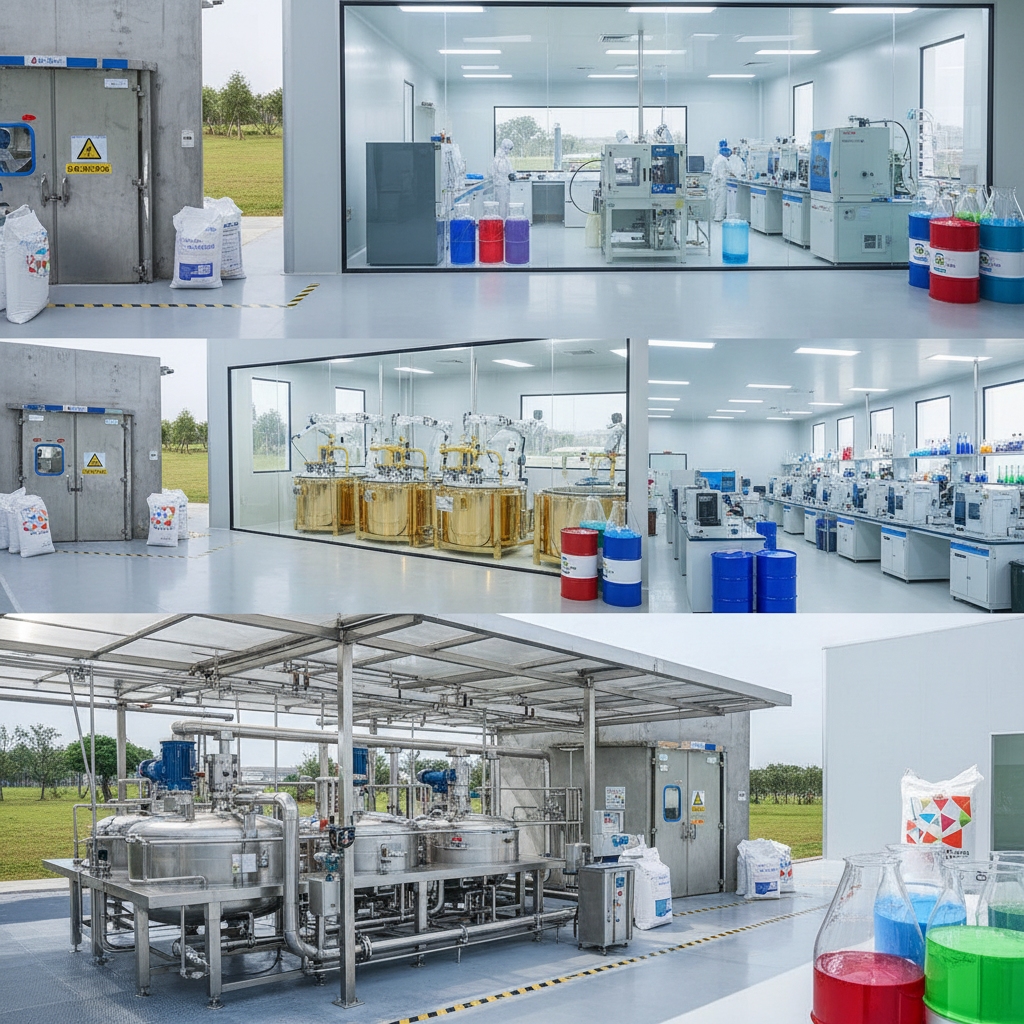
A critical factor is the manufacturer's infrastructure. Having multiple manufacturing bases across different regions can mitigate supply chain risks and ensure a steady flow of materials, especially for high-demand chemicals like electroplating intermediates or phase transfer catalysts.
The following matrix provides a framework for comparing different configuration profiles to determine the best fit for a specific project's technical and economic requirements.
| Configuration Profile | Purity Requirement | Stability Index | Primary Use Case |
|---|---|---|---|
| Basic Configuration | 85% Assay Min | Standard | Decorative Plating |
| Standard Configuration | 90% Assay Min | Moderate | Industrial Coating |
| High-Duty Configuration | 95% Assay Min | High | PCB Manufacturing |
| Precision Configuration | 98% Assay Min | Very High | Semiconductors |
| Automated Configuration | 99% Assay Min | Ultra-High | Pharmaceutical R&D |
| Industry Baseline | 80% Assay Min | Low | General Synthesis |
The assay percentage represents the purity of the active chemical. In electroplating, a lower assay means more impurities are introduced into the bath, which can lead to uneven copper deposition, reduced brightness, and potential contamination of the coating. Maintaining a minimum of 85.0% ensures that the brightening and leveling effects are predictable and consistent across different batches.
The thiol group (-SH) has a strong affinity for metal surfaces, particularly copper and steel. It forms a dense, monomolecular protective layer that prevents oxygen and moisture from reaching the metal surface, thereby inhibiting oxidative damage. This makes organosulfur intermediates highly valuable for protecting sensitive electronic components in aqueous environments.
Yes, MPS is utilized in gold and silver plating solutions to improve adhesion and surface finish. Its ability to bind to the metal surface helps refine the grain size of the deposited gold, resulting in a smoother and more brilliant finish, which is essential for high-end jewelry and precision electronic contacts.
Scaling requires a manufacturer who can maintain the same impurity profile at a larger volume. You should evaluate the supplier's manufacturing bases and their quality control labs. Ensure they can provide a Certificate of Analysis (CoA) for bulk shipments that matches the specifications of the research-grade samples used during the development phase.
Solubility determines how easily the chemical can be integrated into an aqueous bath. MPS, with approx. 50% solubility at 20℃, allows for a controlled concentration in acid copper baths. If solubility is too low, the chemical may precipitate; if too high, it might not bind effectively to the metal surface, affecting the leveling and brightening results.
As chain transfer agents, these chemicals control the molecular weight and architecture of polymers during synthesis. By introducing thiol or sulfonic groups, they allow for the functionalization of the polymer chain, which can be used to create hydrogels, modify the polarity of the material, or create binding sites for biological stains.
The procurement of high-purity intermediates is no longer a simple commodity purchase but a strategic engineering decision. The ability to source materials that combine specific nucleophilicity with precise solubility, such as the properties found in Sodium 3-mercaptopropanesulphonate, directly impacts the reliability of semiconductor interconnects and the quality of pharmaceutical precursors.
For organizations looking to optimize their production cycles, partnering with experienced pharma intermediates manufacturers who offer a seamless transition from research to industrial scale is the most effective way to ensure technical consistency and reduce time-to-market for advanced chemical products.


Moneide Chemicals