





Moneide Chemicals
Tel: 86-315-8309571
WhatsApp/WeChat/Mobile: 0086-15633399667
Skype: janet-honest
Mail: sales@moneidechem.com
Address: 2-7-523 Jidong Building Materials Tangshan, Hebei 064000 China
|
Chemical Name |
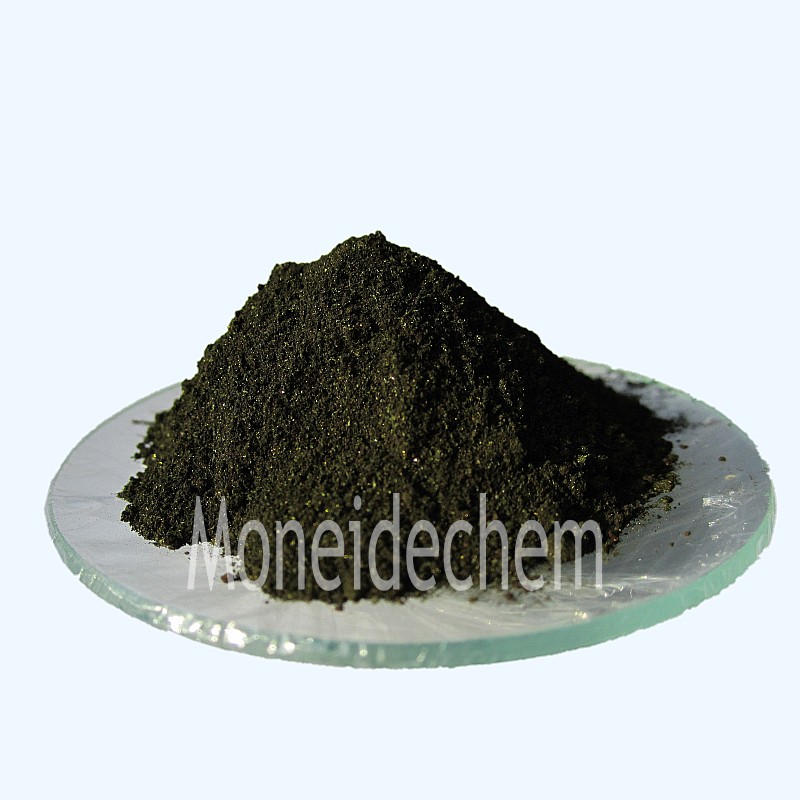
Azure B |
|
CAS No. |
531-55-5 |
|
Molecular formula |
C15H16ClN3S |
|
EINECS No. |
208-511-2 |
|
Molecular weight |
305.83 |
|
Molecular Structure |
|
|
Details |
Appearance: Shiny green crystalline or bottle green powder. Maximum absorption wavelength: 620 ~634 nm. Biological dyeing test: pass test Loss on drying: 7.5% max. Ignition residue(SO4): 23.5% max. Package: 25kg/ fibre drum |
|
Main Application |
Used as biological dyeing agents, such as the nucleus dyeing. |

1. What is Azure B used for?
Azure B is a metachromatic dye primarily used in biological staining, particularly in Romanowsky-type stains like Wright-Giemsa for blood smears and bone marrow samples. It helps differentiate cellular components, staining nuclei blue and enhancing the visibility of RNA-rich structures like ribosomes. Azure B is also employed in histology for detecting acidic tissue elements and in neuroscience research to track neuronal activity. Additionally, it serves as a photosensitizer in photodynamic therapy and has applications in textile dyeing due to its strong affinity for certain fabrics.
2. What is the difference between Azure B and methylene blue?
Azure B and methylene blue are both thiazine dyes, but Azure B is a demethylated derivative of methylene blue with distinct staining properties. While methylene blue stains uniformly blue, Azure B exhibits metachromasia, producing varying hues depending on tissue composition. Azure B is more sensitive to RNA and acidic structures, making it superior for cytological detail in Romanowsky stains. Chemically, Azure B lacks one methyl group compared to methylene blue, altering its solubility and binding affinity. Both dyes have antimicrobial properties, but Azure B is preferred in advanced histological techniques.
3. What is the Azure B series?
The Azure B series refers to a group of related thiazine dyes, including Azure A, Azure B, and Azure C, which differ in methylation levels. These dyes are key components of Romanowsky stains, used collectively to achieve polychromatic staining of blood cells and tissues. Azure B is intermediate in methylation, offering balanced staining intensity for nuclei and cytoplasm. The series is vital in hematology for diagnosing blood disorders, as each variant contributes unique chromatic effects. Their shared structure allows customizable staining protocols, with Azure B often being the preferred choice for its versatility and precision.




Moneide Chemicals


