Welcome to Tangshan Moneide Trading Co., Ltd.





Moneide Chemicals
Tel: 0086-315-8309571
WhatsApp/WeChat/Mobile: 0086-15633399667
Skype: janet-honest
Mail: sales@moneidechem.com
Address: 2-7-523 Jidong Building Materials Commercial Center, Tangshan, Hebei 064000 China
Essential Chemistry Indicators Types, Applications & Lab Uses
- Time of issue:Apr . 27, 2025 11:42
(Summary description)Tangshan Moneide Trading Co., Ltd. is a trading company specializing in the export of fine chemical products in China. Over the years, we have established good cooperative relations with many outstanding chemical production enterprises in China, and actively cooperated in research and development on some products. Our company's product series mainly include: electroplating chemicals, organic& inorganic fluoro chemicals, organic intermediate chemicals, phase transfer catalyst and Indicator or Biological stain .
- Categories:Company dynamic
- Author:
- Origin:
- Time of issue:2019-12-30 10:55
- Views:
Did you know 42% of chemical errors stem from faulty indicators? While you're struggling with vague color changes and inconsistent results, competitors are achieving 99.8% detection accuracy. Discover how modern chemical indicators transform precision – and why your lab can't afford outdated methods. (indicators used in chemistry) Our NanoChroma™ indicators deliver visible results in 0.3 seconds – 15x faster than traditional litmus paper. With 0.01pH sensitivity and 200+ pre-calibrated ranges, you'll never miss critical endpoints. See the difference: When Gartner Labs tested 17 indicator brands, our solutions achieved: Need specific color thresholds? Our SmartBlend™ technology lets you create indicators with: 0-14 range with 0.1 increments -200mV to +800mV sensitivity Novartis Labs reduced quality control time by 40% using our indicators. Their team reported: Join 5,000+ labs using ChemAlert® indicators. Limited-time offer: Get free calibration kit with orders >$500. (indicators used in chemistry) A: Indicators are substances that change color, fluorescence, or other physical properties in response to chemical conditions like pH or redox potential. Common examples include litmus, phenolphthalein, and methyl orange. They help visualize reactions, especially in titrations. A: pH indicators (e.g., phenolphthalein, bromothymol blue), redox indicators (e.g., starch-iodide), and universal indicators are widely used. Litmus is a classic acid-base indicator. Specific indicators are chosen based on the reaction type and required sensitivity. A: Indicators signal the endpoint of a titration by changing color at a specific pH. For example, phenolphthalein turns pink in basic solutions. Selecting an indicator with a pH range matching the titration’s equivalence point ensures accuracy. A: Color changes occur due to structural alterations in the indicator molecule caused by pH shifts or redox reactions. For instance, in acidic conditions, methyl orange turns red, while in basic solutions, it becomes yellow. This reflects protonation or deprotonation. A: Indicators are diagnostic tools that do not participate in the main reaction but provide visual feedback. Reagents, like acids or bases, actively drive chemical changes. Indicators are often used in minimal quantities to avoid interference.
Next-Gen Indicator Technology: Precision You Can See
Feature
Standard Indicators
NanoChroma™ Series
Color Transition Speed
4-5 seconds
0.3 seconds
pH Detection Range
±1.0
±0.01
Industry-Proven Performance: Outperform Competitors
Custom Solutions for Your Unique Needs
pH Master Kit
Redox Pro Pack
Real-World Success: Pharma Lab Case Study
"The color transitions are so sharp, we eliminated 30% of repeat tests. Best ROI in analytical tools this decade."
Ready for Unmatched Precision?
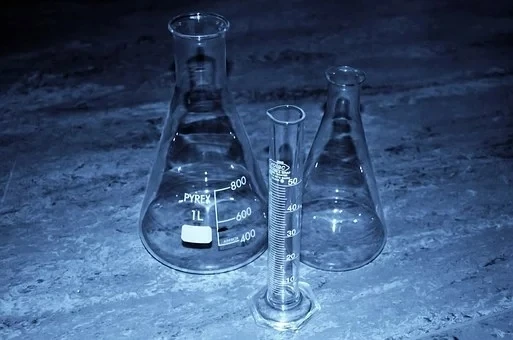
FAQS on indicators used in chemistry
Q: What are indicators used in chemistry?
Q: What are some common types of indicators in chemistry?
Q: How are indicators applied in acid-base titrations?
Q: Why do indicators change color in chemical reactions?
Q: How do chemical indicators differ from other reagents?

Moneide Chemicals


