Welcome to Tangshan Moneide Trading Co., Ltd.




Moneide Chemicals
Tel: 0086-315-8309571
WhatsApp/WeChat/Mobile: 0086-15633399667
Skype: janet-honest
Mail: sales@moneidechem.com
Address: 2-7-523 Jidong Building Materials Commercial Center, Tangshan, Hebei 064000 China
Comprehensive Guide to Rhodamine B Properties Applications and Sourcing
- Time of issue:Mar . 06, 2026 04:25
(Summary description)Tangshan Moneide Trading Co., Ltd. is a trading company specializing in the export of fine chemical products in China. Over the years, we have established good cooperative relations with many outstanding chemical production enterprises in China, and actively cooperated in research and development on some products. Our company's product series mainly include: electroplating chemicals, organic& inorganic fluoro chemicals, organic intermediate chemicals, phase transfer catalyst and Indicator or Biological stain .
- Categories:Company dynamic
- Author:
- Origin:
- Time of issue:2019-12-30 10:55
- Views:
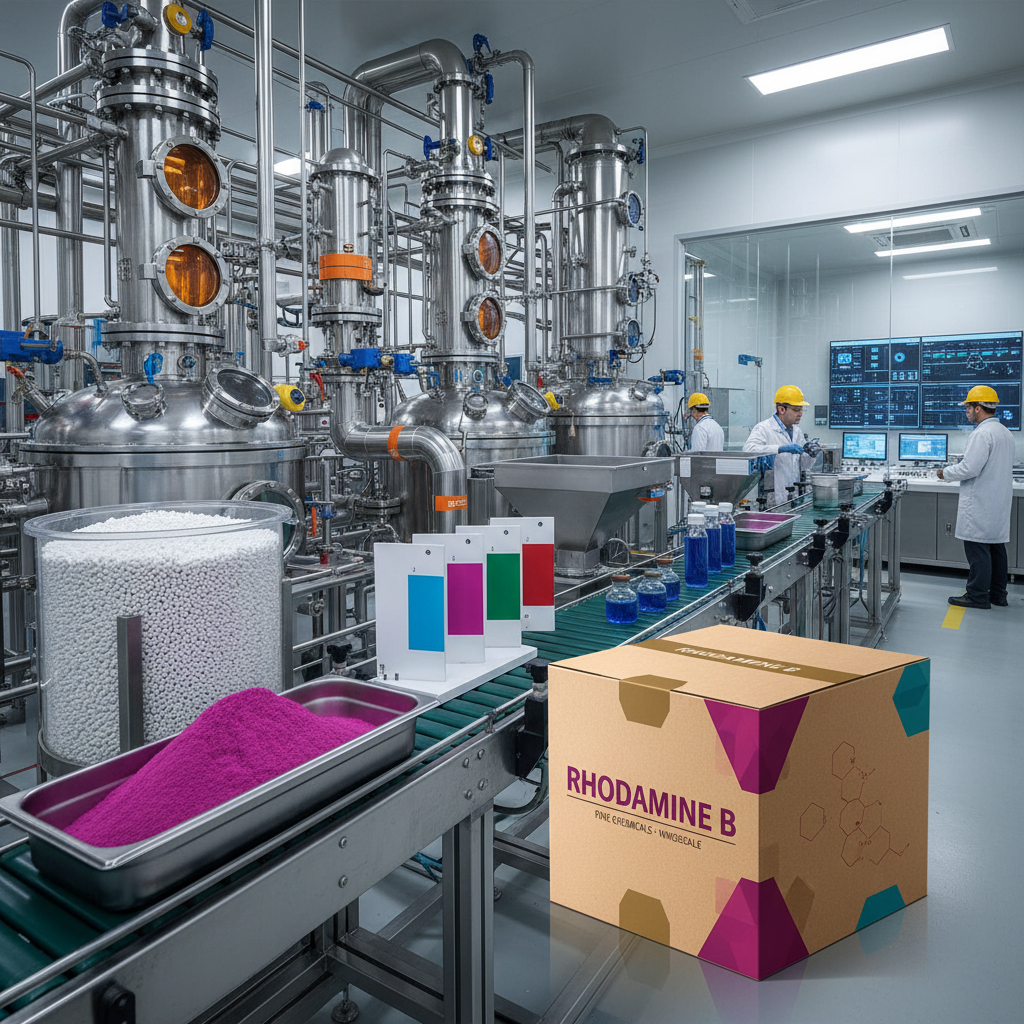
Rhodamine B is a bright, intensely fluorescent dye widely used across various scientific and industrial applications. Known for its vivid pink color and exceptional sensitivity, it’s a cornerstone in research, analytical chemistry, and textile industries. This article provides a deep dive into the properties, uses, safety considerations, and where to purchase Rhodamine B from a trusted supplier. Understanding Rhodamine B’s characteristics is crucial for achieving optimal results in its diverse applications. Rhodamine B, with the chemical formula C27H29NO7, is a xanthene dye. It’s soluble in water, ethanol, and other polar solvents, forming a brilliant pink solution. A key property is its high quantum yield, meaning it efficiently converts absorbed light into emitted fluorescence. Its excitation wavelength is around 555 nm (green light), and it emits at approximately 590 nm (orange-red light). These specific wavelengths are fundamental to its use in fluorescence microscopy, flow cytometry, and other analytical techniques. The dye is also pH-sensitive, exhibiting changes in fluorescence intensity with varying pH levels. This characteristic can be utilized in pH-sensing applications. Key Highlights: Highly fluorescent, soluble in polar solvents, pH sensitive, excitation wavelength ~555 nm, emission wavelength ~590 nm. The versatility of Rhodamine B leads to diverse applications. In biological research, it's used to stain cells and tissues for fluorescence microscopy, enabling visualization of cellular structures. In analytical chemistry, it serves as a tracer dye for fluid flow studies and a fluorescent indicator in spectrophotometry. The textile industry utilizes Rhodamine B for dyeing wool, silk, and nylon, creating vibrant and durable colors. It’s also found in laser dyes and as a component in certain inks and paints. Its intense fluorescence is vital for security applications, such as detecting counterfeit documents. Furthermore, Rhodamine B plays a role in environmental monitoring, used in the study of water currents and pollutant tracing. Key Application Areas: • Fluorescence Microscopy • Analytical Chemistry • Textile Dyeing • Environmental Monitoring Rhodamine B is available in various purity levels, impacting its performance and suitability for specific applications. Common grades include technical grade, dye grade, and high-purity grade. Technical grade, typically around 95% purity, is suitable for general applications like textile dyeing. Dye grade, with purity levels around 98%, is used for more sensitive applications. High-purity grade, often exceeding 99%, is essential for demanding analytical and research applications, minimizing interference and ensuring accurate results. Different grades also vary in terms of impurity profiles, potentially affecting fluorescence intensity and spectral characteristics. When selecting Rhodamine B, carefully consider the required purity level based on your intended use. While incredibly useful, Rhodamine B requires careful handling due to potential health hazards. It is an irritant to the skin, eyes, and respiratory system. Avoid contact with skin and eyes, and always wear appropriate personal protective equipment (PPE), including gloves, safety glasses, and a lab coat. Inhalation of dust should be avoided, utilizing a fume hood or respirator when handling the powder form. Rhodamine B is not considered highly toxic, but prolonged exposure may cause adverse effects. Always refer to the Material Safety Data Sheet (MSDS) before handling and follow proper disposal procedures. It is also crucial to store Rhodamine B in a tightly sealed container, away from light and incompatible materials. When procuring Rhodamine B, selecting a reputable supplier is paramount to ensure product quality and consistency. Moneide Chem is a leading provider of fine chemicals, offering a range of Rhodamine B grades to meet diverse application needs. We provide comprehensive product specifications, rigorous quality control, and reliable delivery. Our commitment to customer satisfaction and adherence to industry standards makes us a trusted partner for researchers, manufacturers, and analysts globally. We provide detailed technical support and documentation to assist you in achieving optimal results. Rhodamine B is a powerful and versatile dye with countless applications. By understanding its properties, safety considerations, and sourcing it from a reliable supplier like Moneide Chem, you can unlock its full potential for your research and industrial endeavors. Rhodamine B should be stored in a tightly sealed container, protected from light, heat, and moisture. Exposure to light can cause degradation of the dye, reducing its fluorescence intensity. Store it in a cool, dry place, ideally between 2°C and 8°C. Avoid storing it near oxidizing agents or incompatible chemicals. Proper storage is crucial for maintaining the dye’s stability and extending its shelf life. Long-term storage under inert gas (e.g., nitrogen) can further enhance stability. Rhodamine B is not readily biodegradable and can persist in the environment. Its release into waterways can cause visible staining and potentially harm aquatic life. Therefore, proper waste disposal procedures are essential. Rhodamine B waste should be collected and disposed of in accordance with local environmental regulations. Treatment methods like activated carbon adsorption or advanced oxidation processes may be required to remove Rhodamine B from wastewater. Minimizing its use and adopting environmentally responsible practices are crucial. While Rhodamine B can be used for cell staining, it’s generally less preferred than other dyes specifically designed for biological applications due to potential toxicity concerns. There are alternative fluorescent dyes, such as Rhodamine 123 or Texas Red, which are considered more biocompatible for live cell imaging. If Rhodamine B is used for cell staining, it's crucial to minimize its concentration and exposure time and to thoroughly wash the cells after staining. Always consult relevant safety guidelines and consider the specific requirements of your experiment. Rhodamine B and Rhodamine 6G are both xanthene dyes, but they differ in their chemical structures and properties. Rhodamine 6G has a higher fluorescence quantum yield and emits at a slightly different wavelength compared to Rhodamine B. Rhodamine 6G is often preferred for laser dyes due to its higher efficiency, while Rhodamine B is more commonly used in textile dyeing and certain biological applications. Rhodamine 6G also exhibits better solubility in organic solvents. Choosing between the two depends on the specific requirements of your application.Rhodamine B: A Comprehensive Guide to Properties, Applications & Sourcing
Understanding the Chemical Properties of Rhodamine B
Applications of Rhodamine B Across Industries
Rhodamine B Grades and Purity Levels
Safety Considerations When Handling Rhodamine B

Sourcing High-Quality Rhodamine B from Moneide Chem
Conclusion: Choosing the Right Rhodamine B for Your Needs
Frequently Asked Questions (FAQs)
What is the optimal storage condition for Rhodamine B?
Is Rhodamine B biodegradable?
Can Rhodamine B be used in human cell staining?
What is the difference between Rhodamine B and Rhodamine 6G?




Moneide Chemicals


