Welina mai iā Tangshan Moneide Trading Co., Ltd.





Nā Mea Kimi Moneide
Tel: 86-315-8309571
WhatsApp/WeChat/Mobile: 0086-15633399667
Skype: janet-honest
Leka: sales@moneidechem.com
Wahi: 2-7-523 Jidong Building Materials Tangshan, Hebei 064000 Kina
Basic Blue 9
|
Inoa Kimia |
Basic Blue 9 |
|
Nā huaʻōlelo like |
3,7-Bis(dimethylamino)phenazathionium chloride; Methylene Blue; |
|
ʻAno molekala |
C16H18CLN3S |
|
CAS No. |
61-73-4 |
|
EINECS No. |
200-515-2 |
|
Kaumaha molekula |
319.85 |
|
Hoʻokumu Molecular |
|
|
Nā kikoʻī |
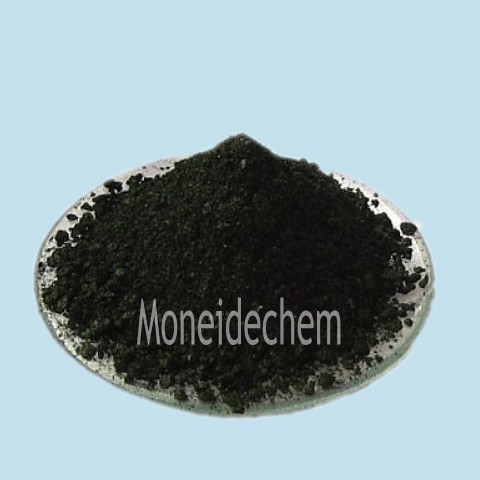
Appearance: Bottle green crystal or crystalline powder with gunmetal shine, without smell. Assay: 98.0% min. Change color range: Passes test Solubility in ethanol: Passes test Loss on drying: 15%max Sulfated ash: 0.5%max Biological stain: Passes test As: 0.0005%max Cu: 0.03%max Zn: 0.02%max Solubility: soluble in water, ethanol and chloroform, insoluble in aether, water solution is blue. Packing: 25kg/ fibre drum |
|
Noi Nui |
Used for REDOX indicator, adsorption indicator and biological dyeing agents. |

What is Basic Blue 9?
Basic Blue 9, chemically known as Methylene Blue, is a heterocyclic aromatic compound with the molecular formula C₁₆H₁₈ClN₃S. This synthetic dye belongs to the phenothiazine class, characterized by its distinctive deep blue color in solution. As a cationic dye, it carries a positive charge that enables strong binding to negatively charged surfaces and molecules. The compound exists in multiple forms including chloride salt and trihydrate versions, with the latter being more stable for laboratory use. Its unique redox properties allow it to alternate between colored oxidized and colorless reduced states, making it valuable for various scientific applications. The dye's planar molecular structure facilitates intercalation with biological molecules, contributing to its diverse functionality in both industrial and medical fields.
What is Basic Blue 9 used for?
Basic Blue 9 serves multiple purposes across medical, biological, and industrial domains. In healthcare, it's used to treat methemoglobinemia and as an antidote for cyanide poisoning. Microbiologists employ it for Gram staining and viability testing of cells, while histologists use it for nervous tissue visualization. The dye functions as a redox indicator in chemical experiments and finds application in aquaculture as an antifungal agent. Industrial uses include textile dyeing for silk and cotton, as well as a colorant in inks and paper products. Recent research explores its potential in photodynamic therapy and as an inhibitor in neurodegenerative disease studies. Its ability to selectively stain certain tissues and microorganisms makes it indispensable in diagnostic procedures.
What is the feature of Basic Blue 9?
Basic Blue 9 exhibits several distinctive characteristics that make it scientifically valuable. Its intense blue coloration shows excellent visibility even at low concentrations, with maximum absorption at 668nm in aqueous solutions. The compound demonstrates reversible redox activity, changing between blue oxidized and colorless reduced forms depending on environmental conditions. It displays moderate water solubility and good stability in acidic conditions, though it degrades under strong light exposure. The dye's cationic nature enables strong electrostatic interactions with anionic cellular components like nucleic acids. Unique photochemical properties allow it to generate reactive oxygen species under illumination, contributing to both therapeutic and antimicrobial effects. These combined features make it exceptionally versatile for applications ranging from medical treatments to industrial processes and scientific research.

Mea Kimi Moneide


