





Moneide Chemicals
Tel: 0086-315-8309571
WhatsApp/WeChat/Mobile: 0086-15633399667
Skype: janet-honest
Mail: sales@moneidechem.com
Address: 2-7-523 Jidong Building Materials Commercial Center, Tangshan, Hebei 064000 China
Solvatochromic Indicators Chemistry in Different Solvent Polarities
- Time of issue:سبتمبر . 08, 2025 15:02
(Summary description)Tangshan Moneide Trading Co., Ltd. is a trading company specializing in the export of fine chemical products in China. Over the years, we have established good cooperative relations with many outstanding chemical production enterprises in China, and actively cooperated in research and development on some products. Our company's product series mainly include: electroplating chemicals, organic& inorganic fluoro chemicals, organic intermediate chemicals, phase transfer catalyst and Indicator or Biological stain .
- Categories:Company dynamic
- Author:
- Origin:
- Time of issue:2019-12-30 10:55
- Views:
The mesmerizing color shift of a solution when solvent polarity changes isn't mere magic—it's indicators chemistry in action! Solvatochromic indicators, molecular chameleons, transform their absorption spectra in response to their solvent environment. This phenomenon provides critical insights into solvent-solute interactions, polarity scales, and molecular behavior. Understanding these chromic transitions bridges theoretical chemistry and real-world applications, from environmental monitoring to pharmaceutical analysis. In this exploration, we dissect the intricate dance between solvent polarity and indicator behavior, spotlighting both natural and synthetic marvels like Chrome Blue K while highlighting Tangshan Moneide Trading Co., Ltd.’s role in advancing this field since 2011. Indicators chemistry deciphers how molecular probes respond to environmental changes. Solvatochromism—where compounds visibly shift color (absorption maxima) with solvent polarity—relies on ground- and excited-state dipole moments. Polar solvents stabilize polar excited states, causing redshift (positive solvatochromism) or blueshift (negative solvatochromism). Key factors include: Dielectric Constant (ε): Governs electrostatic stabilization. Hydrogen-Bonding Capacity: Alters electron density via proton donation/acceptance. Polarizability: Affects dispersion forces. Kamlet-Taft parameters (α, β, π*) quantify these interactions. For instance, nitroaniline dyes redshift in water (ε=80) versus hexane (ε=2). Synthetic indicators like Chrome Blue K leverage this for precision analysis. Unlike pH indicators, solvatochromic probes map continuum polarity, enabling solvent classification and reaction medium optimization. This chemistry underpins materials science, where polarity-responsive sensors detect pollutants or monitor polymerization kinetics. Natural indicators chemistry harnesses plant-derived chromophores like anthocyanins (blueberries), curcumin (turmeric), and betalains (beets). These pigments exhibit solvatochromism due to phenolic/polymethine structures sensitive to polarity and pH. Anthocyanins blueshift in acidic water but redshift in methanol, revealing solvent hydrogen-bonding effects. However, natural indicators face challenges: Batch Variability: Anthocyanin content fluctuates with soil/climate. Limited Stability: Degrades under light/heat (e.g., curcumin fades in acetone). Spectral Overlap: Broad bands hinder precise polarity quantification. While sustainable, these inconsistencies impede industrial use. Synthetic alternatives like Chrome Blue K offer reproducibility. For example, Chrome Blue K’s azo-naphthalene core delivers sharp, reversible color transitions in alcohols versus ketones, outperforming anthocyanins in metallurgical titration accuracy. Chrome Blue K (C.I. 16675) exemplifies advanced indicators chemistry. This trisodium salt azo dye transitions from violet in non-polar solvents (e.g., toluene) to deep blue in polar media (e.g., water), driven by its electron-rich sulfonate/hydroxy groups. Its solvatochromic sensitivity stems from: Extended π-Conjugation: Enhances polarity-dependent ICT (Intramolecular Charge Transfer). Ionizable Sites: pH and polarity modulate deprotonation, shifting λₘₐₓ. Product Specifications (Tangshan Moneide Trading Co., Ltd.): Parameter Specification Chemical Name Chrome Blue K Synonyms C.I. 16675; Acid Chrome Blue K CAS No. 3270-25-5 Molecular Formula C₁₆H₉N₂Na₃O₁₂S₃ Molecular Weight 586.41 g/mol مظهر Brownish red or dark red powder Sensitivity (Mg²⁺) ≤0.1 μg/ml Water Soluble Test Passes Sulfated Ash (as SO₄) 33%~39% Main Application Complexometric indicator for metals (Mg, Al) Applications span soil testing (magnesium quantification) and electroplating baths. In acetone-water mixtures, Chrome Blue K’s solvatochromic shift calibrates polarity gradients, ensuring endpoint clarity in titrations. Moneide guarantees batch consistency via dual-test labs, critical for research reproducibility. Chrome Blue K outperforms natural indicators chemistry with unmatched stability, sensitivity (detects ≤0.1μg/ml Mg²⁺), and solvent adaptability. Unlike plant-based dyes, it resists photodegradation and offers sharp endpoints in varying polarities—essential for titrations in mixed-solvent systems. As a metallochromic indicator, Chrome Blue K forms colored complexes with metals. Its solvatochromic properties ensure vivid color transitions (red-to-blue) at endpoints, even in non-aqueous solvents. This precision prevents over-titration in alloy analysis or wastewater testing. Yes! Its sulfonate groups enable solubility across polarities. In toluene/DMSO mixtures, it exhibits predictable solvatochromic shifts, allowing polarity mapping. Moneide’s purity standards (≤0.1% impurities) ensure consistent behavior in diverse matrices. Tangshan Moneide enforces strict QC: raw material screening, reaction monitoring, and final validation in their labs. Parameters like sulfated ash (33–39%) and solubility are verified per batch, aligning with ISO standards for analytical reagents. Moneide supplies gram-to-kilogram quantities globally. Contact their team for custom purity grades, SDS, and logistical support. Their ISO-compliant manufacturing (Jiangsu/Hebei bases) ensures rapid, traceable delivery. Why Partner with Tangshan Moneide?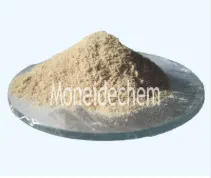
Exploring Indicators Chemistry: Solvent Polarity as a Molecular Canvas
Natural Indicators Chemistry: Beauty and Limitations in Solvent Studies
Chrome Blue K: Precision Engineered for Solvatochromic Analysis
Chrome Blue K FAQ: Optimizing Your Indicators Chemistry
What advantages does Chrome Blue K offer over natural indicators?
How does Chrome Blue K enhance complexometric titrations?
Can Chrome Blue K function in non-polar solvents?
What quality controls support Chrome Blue K production?
How to procure research-grade Chrome Blue K?
Since 2011, Tangshan Moneide Trading Co., Ltd. has pioneered fine chemical exports, specializing in indicators chemistry and solvatochromic reagents. With manufacturing bases in Jiangsu, Hebei, and Shandong, they merge R&D innovation with rigorous QC—two onsite labs validate every Chrome Blue K batch. Their portfolio spans electroplating chemicals, fluorochemicals, and biological stains, serving academia and industry. Moneide’s global sales network offers competitive pricing, regulatory compliance, and technical support, embodying their ethos: "Quality, Affordability, Service."
Solvatochromic indicators chemistry transforms solvent polarity into a visible language, with Chrome Blue K as a synthetically perfected lexicon. Whether replacing natural indicators chemistry or enabling precision metallurgy, this dye exemplifies innovation. Tangshan Moneide Trading Co., Ltd.—backed by 13+ years of excellence—delivers this crucial reagent with scientific rigor. For solvatochromic accuracy that adapts to your solvent’s story, choose Chrome Blue K.




Moneide Chemicals


